Showing posts with label Muslim women. Show all posts

Monday, 13 February 2017

Translating Love’s Confusion: Hollywood and Misreading Rumi

The 2010 Hollywood celebrity fest chick-flick Valentine’s Day opens with Reed Bennett, a florist played by Ashton Kutscher, proposing marriage to Morley (Jessica Alba), as she wakes up on Feb. 14.
Evidently startled, Morley initially accepts, sending Reed on a joyful mission to let everyone know his sweetheart said “yes”! But his elation is short-lived. A few hours later Reed finds Morley in his apartment packing her bag as she hands back his ring and walks out on the relationship entirely.
Just then, as movie’s downtrodden protagonist leaves the scene, the narrator — a radio show host named “Romeo Midnight” — drops a word of wisdom that sounds a tinge sufi.
“It’s Romeo Midnight back again. And if those topsy-turvy feelings have got you twisted inside out, think of the poet Rumi who 800 years ago said: `All we really want is love’s confusing joy.’ Amen, brother.”
Heart of Steel, by Livlu Ghemaru
When I watched this movie shortly after its release, I was bemused at the irony of hearing a 13th-century Islamic poet and scholar quoted in a cheesy American blockbuster seemingly unwittingly. A Persian poet of love, Rumi is often uprooted from his historical context and polished for resale for Western audiences who may not realize his object of affection isn’t a romantic love interest, but the Divine Beloved.

Monday, 30 May 2016

Of Saints and Matchmakers

As I was growing up, Islam’s benevolent female saints existed in my imagination as otherworldly matchmakers. 

Common features of my family’s infrequent summer holidays with relatives in Egypt were visits to mosques enclosing the shrines of Sayyida Zainab and Sayyida Nafisa, two descendants of the Prophet Muhammad who have come to be regarded as Cairo’s patron saints, may God grant them peace and blessings. My mother, often with her sisters who lived in smaller cities along the Suez Canal, would arrange mini pilgrimages to these grand Cairene mosques for a single purpose: to pray for suitable partners for their unmarried children. 
Female worshippers gather around Sayyida Zainab’s mausoleum in Cairo

Amidst weeps and whispers, they would gather around the mausoleums of these saints offering earnest prayers to rescue their single daughters and sons from the matrimonial side lines. From beyond the divide between this world and the next, these venerable women of faith would intimately identify with the anguish of being the mother of an unwed child and act as intermediaries with God in removing the obstacles blocking the perfect partner from springing forth – at least that was the hope of my female kin.

While my own memories of these visits are vague and likely layered by personal accounts relayed by my mother over the years, the urgency placed on marriage left me feeling perplexed. The more I found myself becoming the focal point of the prayers, the more frustrating and painful these pilgrimages became.

By my mid- and then late 20s, the cultural pressures to wed young and my inability to make it happen 
inadvertently alienated me from faith, and obscured my view of the spiritual significance and prowess of these female saints. My only encounters with them were a manifestation of socio-culture pressures that dictate a woman’s value lies solely in her success as a wife and mother, a line of thinking that left me jaded and confined rather than empowered by their presence.

Sunday, 15 November 2015

Light Upon Light


In the moments before I first learned of the darkness unfolding in Paris on Friday, I was sitting in a circle of light.

Some fellow seekers and I were seated as we often are on Friday evening, pondering on the path of those yearning for closeness and presence with God.

On this particular occasion, we were discussing a passage of Islamic poet Rumi's Masnavi called Veils of Light.

Each rich line reminded me of what drew me to this path of Islam in the first place: a crystal clear moment of understanding in 2010 when I first encountered that Light. When the first veil was lifted, revealing a love that transformed how I would perceive everything from that moment.

We seekers will often squint, blocking the light from coming through, as we endure the trials and tribulations that life hands to all of us. But there it is, shining in once we gain the strength to open our eyes again.

This Light doesn't blind us despite its brightness, it transforms our vision and allows us to see the next step on the path more clearly. This Light does not bring darkness. It brings mercy, compassion and justice. 


This Light does not harm another soul, for harming one would be as damaging as harming all, as the Quran teaches. It forces us, rather, to look within and battle our own demon, the ego that prevents us from seeing the Light.

A wise, humble and loving Shaikh speaking on Islamic extremism to an audience gathered at a London church in September described political Islam as "collective egoism: nafs (ego) magnified on a social scale."

Tuesday, 2 April 2013

In her shoes

My piece for the International Museum of Women's Muslima exhibition was published today here. It was shortened slightly from the original, which I've included below.

-------------------------
In Her Shoes

I’ve been thinking about how she encouraged me to be myself.

There she was, a single mother of three, managing a family business that her late father had entrusted her with. She worked with such professionalism, poise and proficiency that the community of men surrounding her held her in high esteem. Known for her hard work and competence, she was also regarded as a symbol of compassion and devotion to God. A number of men, enamoured by her vitality and charm, attempted to court her. After two marriages left her widowed, she would consistently turn a cold shoulder to these suitors, not interested in forging another bond in matrimony.

Until, that is, she met him.

He entered her heart when she wasn’t expecting it could open again to enclose the intense sensations of love and admiration that were unexpectedly flourishing within her. There’s always one person, it seems, who has the potential to awaken feelings of affection and enliven our drab daily routines. She was 40, while he, at 25, was determined, trustworthy and beaming with the integrity, intellect and virtue she sought after but rarely encountered.

Inspired by her feelings of fondness, she decided to do what was most natural: she proposed marriage to this gentleman 15 years her junior. Taken aback and flattered, he enthusiastically accepted. What followed was a marriage teeming with mutual reverence, respect, love and support that brought four new lives into the world, all of them girls.

It was almost three years ago when I first came across this story – the story of Khadija, the first wife of the Prophet Muhammad, peace and blessings be upon him.

At the time, I was beginning to uncover the layers of my faith in God that, for most of my life I’d allowed to remain dormant, buried in the background of my consciousness. My faith languished as I actively pursued a career in journalism and sought successes I deemed to be incompatible with the rigorous demands of spiritual development. Five daily prayers, regular fasting, remembrance through repeated supplications, and periodic acts of charity would be too difficult and impractical to incorporate into a modern lifestyle that revolved around long hours in the office, household chores and engagements with family and friends.

Or so I imagined.

As my spiritual radar became activated, the very expressions of faith I had long ignored nestled into my daily schedule seamlessly. Islam, which refers to a state of mind whereby one strives to live in complete devotion to God, or Allah in Arabic, was, I discovered, natural and easy. Aligning daily routines around acts of worship to God, rather than attempting to append spiritual activity here and there where convenient, became the only logical way for me to attain a consistent state of peace of mind.

Khadija taught me these lessons on devotion more than any other human being.  She became my benchmark. By any measure in today’s world, she would embody the modern successful woman I’ve sought to become. We would commend her for the ambition that motivated her success, and for her ability to delicately balance this with qualities of compassion and maternal tenderness. We would applaud her for being so confident and audacious to propose marriage to a much younger man.

“Her chastity, dignity and elegance were virtues widely known and talked about,” writes Resit Haylamaz in a succinct biography on Khadija’s life, which describes her pivotal role in the Prophet’s journey to discovering Islam. “In today’s terms, she would be called an international businesswoman; she had many people working for her in different countries—in the Roman and Persian Empires as well as the Gassasina, Hira and Damascus regions.”

We would admire, too, Khadija’s unwavering faith in the one Almighty God at a time when the prevailing mainstream pressures surrounding her rejected this belief.  She was the very first person in history to embrace Islam. When Muhammad, the last of a line of prophets including Abraham and Jesus, peace be upon them, received his first divine revelation, he returned home agitated and fearful. Seeking the comfort of his wife, he asked her to cover him with a blanket.

As she embraced him, Khadija advised Muhammad to “persevere and be steadfast.” “By Him in whose hand is my soul, I believe that you are the prophet of this nation,” she said, offering her spouse what a complementary partner should: encouragement and solace in times of trial.

During their 25-year marriage, Khadija and Muhammad endured enormous hardship as the predominant tribe in Mecca, where they lived, opposed the development of Islam. Muslims were persecuted, trade with them was forbidden and, eventually, Khadija was forced to leave the city of her birth along with other believers. The couple, who endured the death of two young sons, were exiled and compelled to live in hunger and poverty. Khadija could have forsaken her husband in favour of wealth and a life of comfort. She chose instead to remain steadfast in the face of cultural pressures to conform and, in the end, one of Mecca’s wealthiest women left the world, at 65, from a starving community in exile.

Her firm faith inspired my quest to orient my life around actions that would help me attain spiritual maturity. Khadija’s example also strengthened my resolve in the face of often-inflexible cultural distortions of Islam. As I acquainted myself with the mother of believers, the barriers that I imagined were hindering my path, particularly as I crossed the age of 30 without marriage, crumbled.

I grew up in a household of women. As circumstances placed a good deal of  financial responsibility on me from a relatively young age, I ventured out into the world on my own to earn a living and carve a slice of success by employing the skills of writing, editing, researching and critical thinking God had given me. Along the way, I haven’t yet forged a bond strong enough to lead to marriage. As I embraced Islam, I realised that I didn’t need to regard this as a failure. God, after all, times each milestone with a precision and perfection that we simply cannot comprehend.

The seemingly impossible quest of trying to balance financial responsibilities toward my family with the demands of Arab culture that dictated I should marry young suddenly became achievable. Rather than denounce my circumstances for not conforming with social norms, I needed to turn off the surrounding noise and focus on accepting the path God had chosen for me: one that was uniquely mine, just as Khadija’s was uniquely her’s.

By embracing my faith, I’ve discovered how to separate myself from the emphasis society places materialism, consumerism, success and sex appeal to achieving lasting happiness. I’ve learned how to involve God intimately in each daily activity, knowing as we’re informed in the Holy Quran, that He is closer to me than my jugular vein. That my soul, too, is in His hands.

There is an intrinsic spiritual equality in the pages of the Quran, which charts out the path individuals take to strive toward eternal peace and escape the facade of modern life. God gives each human soul regardless of gender the chance to attain salvation through acts of prayer, fasting, charity, patience and works of righteousness. The simple, equalising and inherently rationale premise of Islam underscores its appeal to many women, including myself.

In Khadija’s example, and with God’s guidance, I have found more liberty in submitting myself to God in Islam than any feminist ideology, job title, self-help or how-to book, or piece of clothing could ever collectively even come close to giving me. Each day as I pray, and when I fast, give charity, and strive to apply qualities of virtue and consistency to all of my personal and professional relationships, Khadija, may God be pleased with her, is nestled in my heart. For me, she symbolises our potential as women to break through the mould our societies strive to dictate, and find fulfilment and meaning in the uniquely tailored trail God has fashioned for each one of us.

Saturday, 15 December 2012

My sharpened pencil


I'm taking part in an online exhibition called "Muslim Women's Arts & Voices," which is being organised by the San Francisco-based International Museum of Women and is set to launch in early 2013. Muslim women from around the world will be engaging in monthly workshops and discussions in different cities and contributing works of art/writing/poetry/photographs/video, etc, for the exhibition.

We had our first workshop in Sharjah, a city in the United Arab Emirates, earlier this week and I felt so enlivened and inspired by the richly diverse and talented women I met. We were asked to bring one object to represent our identity. I had jotted down some ideas on what I would like to say about myself -- as well as the object I chose which was, simply, a sharpened pencil -- prior to the workshop. Thought it would be relevant to share these here, too!

 .....................................
My name is Daliah Merzaban, I have Egyptian roots, I was born and raised in Canada and I’ve lived in the UAE for seven years working as a financial journalist, analyst and editor. In my current role, I’m an emerging markets editor at Bloomberg News covering finance in the Middle East and North Africa.

That’s my day job. But what I have become most passionate about in the past few years is uncovering the layers of my faith in God through Islamic spirituality, and I write about this journey on my blog, which I started almost two years ago, as well as for the Huffington Post.

For my object, I wasn’t very complex, I chose a pencil and the notepad that accompanies it. If I am to choose one thing that I have carried with me throughout my life it is this item: I’ve been a journalist since I was 17, and before that was always very interested in creative writing, poetry, short stories, from a very young age. So the written word is what I spend most of my very long hours in the office and my free time working with.

I also chose a pencil because before I truly embraced my Islam, I perceived faith as something I needed to enter into with my eyes closed, without rationale, analysis or intellect. To my surprise, as I have investigated Islamic teachings more thoroughly in the past three years, I realised that it was through the acquisition of knowledge and use of reason and logic that certainty of God’s existence becomes most palpable. For me, the pencil is a very simple representation of the acquisition of knowledge, which is a fundamental right for every human being.

In the Quran in Surah 96, God reveals to Muhammad, peace and blessings be upon him, a verse through the Angel Gabriel whereby he orders the Prophet to "Read!" Saying: “Your Lord is the Most-Bountiful One. Who taught by the pen. Taught man what he did not know.” I think these words underscore our responsibility as Muslims to acquiring knowledge to gain a more thorough understanding of our faith.

A pencil is not permanent, it needs to continue to be sharpened and it represents my understanding that I’m on a journey of discovery and I don’t have all the answers. I need to always keep an open mind, and a blank piece of paper in my notebook.

(Read about how studying Arabic reignited my love of pencils and the written word here)

Monday, 20 June 2011

Unlike Fulla, the Islamic Barbie doll, we aren’t objects

'Fulla' is an Islamic answer to 'Barbie' marketed in the Islamic world
I often imagine it must be truly difficult for many non-Muslims to understand why a woman would choose to be Muslim. If you look at the media these days you find so many reasons why it seems absurd for an independent, modern-minded woman to follow the Islamic faith. This month, news emerged that a group of women in Malaysia had set up an ‘obedient wives club’, which sounds dreadful, but somehow manages to be worse than it sounds.

The club’s founders say that domestic violence, infidelity and divorce can be rectified only if women keep their men happy in the bedroom. They should be so good in bed that they are “better than a first-class prostitute”. In effect, they equate a woman’s proper practicing of the Islam with her success at satisfying her man’s carnal desires. Some Indonesian women have opened their own branch of the club.

If I was not a Muslim myself, I would cringe at the thought of a faith that objectifies women such that they are reduced to being sex objects for their husbands. Marriage, in this context, is a union forged solely for physical satisfaction and a man’s faithfulness relies on a woman’s ability to satisfy his sexual needs.

Fulla and Barbie: just toys
At about the same time as that story was splashed in newspapers and news wires across the world, a Kuwaiti woman who had once run for parliament called on sex slavery to be legalised. She argued that buying a sex-slave would protect devout Kuwaiti men from committing the sin of adultery.

Again, what woman would willingly choose to be part of a belief system that assumes men are inherently too weak not to be given to sin, and places on women’s shoulders the burden of ensuring men don't stray from their faith?

I sympathise with non-Muslims. Even as a Muslim I read these articles and cringe. In many ways, they are worse than reading about men suppressing Muslim women in places like Saudi Arabia, where women are struggling even for the basic right to drive.

I cringe because these women attack the most-beautiful aspect of my life, my Islam, and complicate it, tarnish it, misconstrue and misinterpret it. In my view, they are doing a major injustice to humankind and, more importantly, to God. They appear to take the view that we as women are nothing more than Barbie or her Islamic answer, Fulla – objects that can be bought and played with.

Muslim men and women will often loosely cite traditions or Quranic phrases, stripping out the context and relevance, in order to justify their illogical ideas of what it means to be Muslim. In the process, they alienate Muslims and non-Muslims alike. They distort the beauty of God’s message in a way that places ego and fulfilment of pleasure above all else, which is completely at odds with Islam’s purpose.
Indonesian women launch branch of 'Obedient Wives Club'
The term Islam means ‘submission to God’ in Arabic. The more you surrender to the Divine, the less attached you become to the desires and temptations of the world, and the greater freedom you find. As a woman, I have found more liberty in submitting myself to God in Islam than any feminist ideology, job title, self-help or how-to book, or piece of clothing would ever collectively even come close to giving me.

Submission places in a human’s grasp the freedom to be happy in every moment of life, and find purpose and blessing in every hardship and triumph.

A relationship between true Muslim men and women is far greater than a physical bond. One who really loves God and submits her/his self to the Creator as a Muslim would never be unfaithful. That is not part of the language of true submission, that is part of the language of ego and desire that we are supposed to separate ourselves from.

I would applaud efforts to strengthen marriages by encouraging men and women to communicate better and be obedient to each others needs mentally, spiritually and physically. But placing the burden on women is a gross misrepresentation and disservice to Islam.

Islam is simple and inherently rationale, hence its appeal to me and many women. God gives each human soul the chance to attain salvation through prayer, fasting, charity, patience and works of righteousness. I often cite the Quranic verse below because it so beautifully encapsulates the egalitarian ideas that God tries to convey to those who are willing to listen:

For Muslim men and women, for believing men and women, for devout men and women, for true men and women, for men and women who are patient and constant, for men and women who humble themselves, for men and women who give in charity, for men and women who fast, for men and women who guard their chastity, and for men and women who engage much in Allah’s (God’s) praise, for them has Allah prepared forgiveness and great reward. 
(Quran, 33:35)

There is an intrinsic spiritual equality between men and women in the pages of the Quran (The Recitation), which charts out the path individuals should take to strive toward eternal peace and escape the facade of modern life. Men and woman are different by nature, and our roles in life are very often complementary. But Islam does not objectify women – patriarchal cultures and traditions upheld by men, and women, do. Islam is a very personal struggle to discover God and find peace.

As I truly embraced Islam in the past year, I discovered how to separate myself from the emphasis society places materialism, consumerism, success and sex appeal in achieving lasting happiness. Islam has taught me to drown out the senseless noise of modern society and allow the beauty of God’s message guide me.

Being a Muslim woman means I am chaste. I involve God intimately in each of my daily activities, knowing as God informs us in the Quran that He is closer to me than my jugular vein. Like everyone, I work and run errands, meet friends and family, cook, clean, shop and travel. But five times each day like clockwork I pull myself away from whatever activity I am doing to kneel in devotion to God in prayer. It is comforting to have this consistency in my life; whether I am having a good day or a bad day, I am constantly drawn back to the Source.

Tuesday, 12 April 2011

Facing the veil

The debate over niqab currently ensuing as France enforces a ban on face veils somewhat bewilders me, mainly because I live in Dubai, a city of striking contrasts that attempts to cater to the values of many of its varied residents who hail from countries around the world. Dubai has become a “salad bowl” of cultures that strive to co-exist while maintaining traditional practices, including attire. On some occasions, I have sensed that women are more liberated in their clothing choices in Dubai than they are in my hometown of Vancouver, Canada.

During a visit to one of Dubai’s many malls, one can pass by scantily clad women wearing mini-skirts and provocative tops and, a few seconds later, walk beside a woman of Gulf Arab nationality donning a black abaya (robe) and full face veil, sometimes accompanied by her husband and children, sometimes with other female relatives or friends and sometimes on her own. 

Diverse attire worn in Dubai shopping mall, courtesy Gulf News
Despite warnings in malls about ensuring that people dress modestly, women are able to buy and wear a diverse array of clothing. Some dress in stylish and modest Western dress, others wear decorative abayas with or without a head-covering, some wear Western-style attire with hair covering, and still others wear traditional Asian attire such as the Indian sari or Pakistani shalwar kameez.

I suppose living in this nuanced environment for a number of years has desensitised me to the issue of women’s attire. I am pretty much fine with what a woman wears so long as she is comfortable. In my view, clothing choices to a large degree are not independently reached. Rather, women are conditioned by the familial and cultural influences they were exposed to growing up. Many women believe their individual liberty can be expressed by exercising their freedom to wear revealing clothing. Many others feel they derive liberty from modest attire that distracts attention away from their physical manifestation and forces people they interact with to focus on their intellect.

Friday, 8 April 2011

Matrimonial penalty box

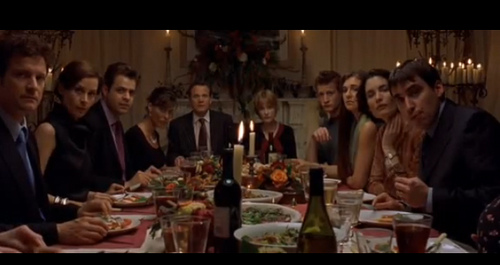
There is a scene in the movie Bridget Jones’s Diary where the single Bridget is attending a couples dinner party at the home of her only married girlfriend and is warned that she’d better hurry up and “get sprugged up” because the ubiquitous ‘clock is ticking’. Bridget is then asked the question that women like her – over 30 and unmarried bachelorettes across the world – dread to answer.

“Why is it there are so many unmarried women in their thirties these days, Bridget?” asks the smug husband of an acquaintance from across the table, with his pregnant wife at his side. Silence falls on the dining room as everyone sets down their utensils and all eyes converge on Bridget, almost expecting her to answer on behalf of every single woman in her thirties, everywhere.


Bridget belts a brief chuckle at the absurdity of the question, and says with a smile, “Oh, I don’t know. Suppose it doesn’t help that underneath our clothes our entire bodies are covered in scales.”

Sometimes I wish I could respond as she did at that moment when emotions of anxiety and embarrassment come together in piercingly sharp force in the centre of even many a resolute woman’s chest. Yet it is not always easy to take questions of postponed marriage in jest and good cheer. The stigma attached to being a single woman above 30 prevails in various cultures, which is why many of us can relate to Bridget, even if the cultural circumstances may differ tremendously.

Arab communities are particularly unforgiving of women who have not tied the knot by 30, and preferably many years younger. I was dismayed by the marriage question six years ago at 25 and I still wince when it is asked today at 31.

The obsession with marriage has made women view forming a family as the only culturally and religiously acceptable way to live their lives. Under this logic, no matter what she may have accomplished, a young Arab woman is doomed to be pitied and feel incomplete without a husband and kids. Some women are pressured to marry early and, as the years pass, to regard any man who has a job, is single and under 45–regardless of whether he happens to have a complementary personality– as a suitable match.

The preoccupation with marriage has caused many women to focus their happiness and fulfilment on securing another person's affection, rather than realising peace within themselves beforehand. There is no use in crushing women’s self esteem as they get further into their 20s and enter their 30s simply because they have failed to cross paths with suitable men.

Sunday, 6 March 2011

Revolution in perception: Egypt's women defy labels, demand rights

"Leave! Leave! Coward" (Carolyn Cole/LA Times)
Images of Egyptian women, many donning the Islamic headscarf known as ‘hijab’, forcefully demanding freedom, rights and the demise of the Hosni Mubarak regime poured into households across the world during Egypt’s revolution. As women stood alongside their brothers, husbands, friends and colleagues to knock down the foundations of a stagnant, repressive government, they also tore down walls of stereotypes that Arab women are passive, mute, repressed victims of a religion and culture that subordinate them.

I have always been enamoured and awed by the power of Egyptian women. My maternal grandmother raised eight children, four girls and four boys, on her own in Cairo after her husband passed away following a battle with prostrate cancer at just 40 years of age. My grandmother has always been an emblematic symbol of an Egyptian woman for me; I see reflections of her courageous spirit, strong character, unwavering faith in God and devotion to her family and neighbourhood in my mother and, more broadly, the women I encounter across Egyptian society. Women wield great economic and moral power in most Egyptian households. It takes only a trip to a traditional fruit and vegetable market to experience their influence first hand; souqs are usually operated by resolute and tenacious women who take charge of the sales, purchases and bargaining.

These are the impressions of Egypt’s women I grew up with, and it has been thrilling to watch the world capture a glimpse of this in the past month and a half. Female participation in the revolution was extensive: young university students seeking greater opportunities and an end to corruption stood alongside mothers of victims of state-sanctioned violence hunting for justice and thought leaders, such as renowned Egyptian feminist Nawal El-Saadawi.

It is my belief that the Egyptian revolution will come to represent a decisive shift in the narrative about the status of women in Arab and Islamic culture. In first week of the revolution in January, I forwarded this Facebook album, which amalgamates images of women in the Egyptian revolution, to friends across the world. The responses I received were immense. For a number of friends and acquaintances in Canada and the United States, the images challenged pre-conceived notions they had held about Arabs, and Muslim women in particular.

Women take part in anti-regime revolt (Felipe Trueba/EPA)
Yet Egyptian women, like their counterparts in other Arab countries, face an uphill battle against patriarchal laws and interpretations of faith which I believe have really clouded the exalted role women are granted by virtue of Islamic faith.

Egypt’s women working toward cementing greater rights and empowerment are planning a demonstration on March 8, dubbed the “Million Woman March”, to coincide with International Women’s Day.  Protest organisers seek to reinforce the role of women in Egypt’s revolution at a time when the government is listening to citizen concerns more than it has at any point in decades – and arguably in the past century.

These are some of the protesters’ demands:

 (Credit unknown)
* Abolition of absolute parental authority over women.
* Empowering women in political life.
* A new civil constitution.
* A new and civil personal status law.
* The immediate application of the Universal Declaration of Human Rights, which stipulates women’s rights in addition to all other international agreements that Egypt signed on to; many of them are inactive and not applied.
* Rewriting all Egyptian laws to ensure equality for men and women.
* The abolition of all forms of political and social tutelage forced on Egyptian women.

While I am uncertain how these demands will play out, I believe this bold move will send a message that watershed transformation in Egypt should not be allowed to overlook the rights of women of all faiths.

Women pray at Cairo's Tahrir Sq (Credit unknown)
Women have a long way to go to be granted their God-given rights across the Arab world. Islam – a state of mind in which a believer submits her/himself to God – is frequently misconstrued as contrary to the rights of women. For me, this is one of the most-frustrating stereotypes I face as a Muslim woman. It is through embracing the message of God and submitting myself to His will in Islam that I, as a woman and a human being, have been able to attain true freedom.

The Quran, which literally translates from Arabic as ‘The Recitation’, is God’s gift to human beings, regardless of gender. God refers to men and women an equal number of times – in each case on 24 occasions – in the Holy Book and grants each human soul the chance to attain salvation through prayer, fasting, charity, patience and works of righteousness. I often notice in translations of the Quran from Arabic to English that the Arabic term “Naas” (meaning people) becomes “mankind” in the English version, which can detract from the beauty and equality of the message. God’s law speaks of the complementarity of women and men in their lives on this earth, and their equality in striving for eternal peace.

For Muslim men and women, for believing men and women, for devout men and women, for true men and women, for men and women who are patient and constant, for men and women who humble themselves, for men and women who give in charity, for men and women who fast, for men and women who guard their chastity, and for men and women who engage much in Allah’s (God’s) praise, for them has Allah prepared forgiveness and great reward. (Quran, 33:35)

I find great inspiration in the first human being to embrace Islam following the Prophet Muhammed , his first wife Khadija. A widow, Khadija managed her father’s business, fed and clothed the poor, and at the age of about 40, following the death of both of her parents, married Muhammed , who was then 25 and one of her employees.

"Christian + Muslim = Egyptian" Credit unknown
Khadija is regarded as one of history’s rare “perfect women” alongside Mariam, mother of Prophet Jesus. When I contextualise her story with examples of devout women I have encountered in my life – my mother, grandmother, and many women of the Jan. 25 revolution among them – it gives me great hope that Egyptian and Arab women have the strength of mind and character to insist that their rights be recognised and enshrined. Raising our voices at this pivotal point in Arab history is absolutely imperative.