Showing posts with label Arab culture. Show all posts

Monday, 13 February 2017

Translating Love’s Confusion: Hollywood and Misreading Rumi

The 2010 Hollywood celebrity fest chick-flick Valentine’s Day opens with Reed Bennett, a florist played by Ashton Kutscher, proposing marriage to Morley (Jessica Alba), as she wakes up on Feb. 14.
Evidently startled, Morley initially accepts, sending Reed on a joyful mission to let everyone know his sweetheart said “yes”! But his elation is short-lived. A few hours later Reed finds Morley in his apartment packing her bag as she hands back his ring and walks out on the relationship entirely.
Just then, as movie’s downtrodden protagonist leaves the scene, the narrator — a radio show host named “Romeo Midnight” — drops a word of wisdom that sounds a tinge sufi.
“It’s Romeo Midnight back again. And if those topsy-turvy feelings have got you twisted inside out, think of the poet Rumi who 800 years ago said: `All we really want is love’s confusing joy.’ Amen, brother.”
Heart of Steel, by Livlu Ghemaru
When I watched this movie shortly after its release, I was bemused at the irony of hearing a 13th-century Islamic poet and scholar quoted in a cheesy American blockbuster seemingly unwittingly. A Persian poet of love, Rumi is often uprooted from his historical context and polished for resale for Western audiences who may not realize his object of affection isn’t a romantic love interest, but the Divine Beloved.

Tuesday, 26 June 2012

Art of the Streets


On my first visit to Cairo since last year’s popular uprising overthrew Hosni Mubarak following three decades of rule, I was inspired and moved, sometimes to tears, by the graffiti and public art that now decorate the city.

Campaign materials strewn across the city by key candidates in the country’s first free presidential election also took me aback. The last time I visited in September 2010, only photos of the long-time dictator, or his wife and heir-apparent, could be seen adorning Cairo’s streets.

Since the uprising that started in January 2011, Egyptians have reclaimed the streets from their oppressive rulers, and artists, both experts and amateurs, have painted on the walls of the grand Egyptian capital sketches capturing a plethora of opinions and emotions.

Some cry out against decades of military rule. Others capture the anguish endured by the mothers and families of youth killed during the 18-day revolt that left more than 800 people dead at the hands of Egyptian security forces.

Some capture the faces of martyrs in a form of timeless memorial. While stopping to behold public art along a street in Heliopolis, a friend and I ran into a gentlemen who lamented the unjust deaths of “youth, such as flowers," before he and my friend embraced and shed tears. The man expressed genuine anguish at the prospect that the voices of these youth would be lost if the presidential election victory went to a member of the previous regime. I saw similar sentiments expressed in graffiti near my polling station near the Pyramids.


There are works that express hope and immense scepticism for the country's political future on streets, such as Mohamed Mahmoud near Tahrir (Liberation) Square in central Cairo, where battles between unarmed civilians and security forces in January and February 2011 left hundreds dead. A sombre sensation came over me as I visited Tahrir and examined the graffiti along Mohamed Mahmoud on June 15, fulfilling a wish to visit heart of Egypt's uprising on my birthday.

An overwhelming expression of love for Egypt and patriotic spirit inspires much of the artwork I saw during my week-long visit to the Egyptian capital. The various displays of creativity brought to mind a line from the poignant song “Ya Beladi” (Oh My Country) that was dedicated to Egypt’s martyrs last year. In the song, a martyr sings:
             
 “They tell me, ‘Enter Paradise.’ 
 I say, ‘Paradise, is my country’.” 

While I've included a small sample of the public art here, it truly demands a visit to Cairo to fully grasp the magnitude of the revolutionary spirit that now fills the streets of this grand city.


Friday, 10 June 2011

Let’s keep the spotlight on Egypt’s sexual harassment crisis

The insidious prevalence of sexual harassment in Egypt found itself at the centre of a very public, global discussion this year, and I could not be more pleased that this issue has emerged from the shadows.

CBS reporter Lara Logan’s account of her physical and sexual assault by a Cairo mob and news that women detained during the Jan. 25 uprising were subjected to forced virginity tests have given male offenders a sampling of the negative glare and condemnation they deserve. 

These incidents will surely make many tourists think twice about travelling to Egypt and should force society and the government to bring to an end the practice of turning a blind eye to acts of violence against women. For decades, too many men in Egypt have become progressively more cruel and deliberate in their mistreatment of women in public places.

Egyptian women have sought for years to stop sexual harassment
Sexual harassment of Egyptian women is, sadly, ingrained in the cultural fabric of society to the extent that we have accepted it as an unalterable reality, one that women have been forced to adapt to. I certainly became numb following repeated exposure to harassment while living in Cairo after university, and during periodic visits since then.

As a young, cash-strapped journalist when I first moved to the Egyptian capital in 2002, I would take mini buses and vans to and from my family’s apartment in the heart of the Pyramids district to my office in the more upscale neighbourhood of Mohandiseen. The commute took about an hour in the morning rush on Cairo’s congested Pyramids Street.

I was always careful to wear ankle-length skirts or pants, and the sleeves of my blouses would usually extend below the elbow. All but my hair and face were generally covered. Yet not a day would go by that I wasn’t glared at, subject to inappropriate often sexual remarks, objectified, and sometimes touched or stroked by other male passengers.

My cheerful disposition quickly transformed; I became very stern, unsmiling and cold in order to dodge harassment as much as possible. I learned to avoid eye contact with men, instead focusing on a book or out the window as I eagerly awaited my stop each day. It was exceptionally difficult to feel comfortable in my own skin when defiant stares concentrated on every part of my body.

Such an experience is the rule rather than the exception. Some 83% of Egyptian women and 98% of foreign women said in a 2008 poll by the Egyptian Centre for Women’s Rights that they faced sexual harassment while in Egypt. A staggering 46% of Egyptian and 52.3% of foreign women faced harassment daily – and 72.5% of the well over 2,000 women surveyed wore some form of a veil.
Women have little recourse to report abuse

Needless to say after about five months of taking public transportation, I was relieved to be able to afford regular taxis that would pick me up and drop my off. Until today I cannot fathom how women endure the abuse of men every day on public transport; I applaud their courage and strength. My experience in the workplace, at functions and meetings  tended to be more respectful and comfortable.

Yet even after I stopped taking public transportation, men would find ways to do the most appalling things. Once I was waiting for my morning taxi on the street corner in front of my apartment building, and a young man of less than 30 passed by. He stopped a couple of metres away from me at the corner of the fence that bordered the property next door, pulled down his pants and underwear and began masturbating while facing me and staring. Horrified, I ran up the walkway of my building and waited at the top of the stairs until my driver called to inform me he had arrived. From then on, I wouldn’t leave my apartment until a missed call signalled the taxi was downstairs.

It was not always easy to escape quickly when faced with inappropriate behaviour. Often when my hands were full of groceries as I walked home from the nearby souk, young boys would challenge each other to run by, touch my bottom or breast, and then run away. Lecturing them to have some respect or fear of God would induce only laughter. These boys had learned that it is alright to objectify women who are not their sister, relative or family friend. And they faced no consequences for doing so.

The walk to my office, home, grocery store or mall would often be interrupted by a slow-moving car whose driver was scouting the streets for prostitutes. And I don’t even want to remember the remarks I heard and touches I suffered when I once missed the door to the women’s carriage of the Cairo subway and found myself in a subway car teeming with men, many of whom had no concept of respect or courtesy for the opposite sex. What consistently shocked me was the lack of intervention; not one time did a man who very publicly harassed me face any criticism from others standing in the vicinity.

Friday, 8 April 2011

Matrimonial penalty box

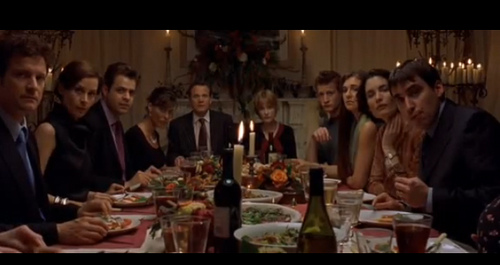
There is a scene in the movie Bridget Jones’s Diary where the single Bridget is attending a couples dinner party at the home of her only married girlfriend and is warned that she’d better hurry up and “get sprugged up” because the ubiquitous ‘clock is ticking’. Bridget is then asked the question that women like her – over 30 and unmarried bachelorettes across the world – dread to answer.

“Why is it there are so many unmarried women in their thirties these days, Bridget?” asks the smug husband of an acquaintance from across the table, with his pregnant wife at his side. Silence falls on the dining room as everyone sets down their utensils and all eyes converge on Bridget, almost expecting her to answer on behalf of every single woman in her thirties, everywhere.


Bridget belts a brief chuckle at the absurdity of the question, and says with a smile, “Oh, I don’t know. Suppose it doesn’t help that underneath our clothes our entire bodies are covered in scales.”

Sometimes I wish I could respond as she did at that moment when emotions of anxiety and embarrassment come together in piercingly sharp force in the centre of even many a resolute woman’s chest. Yet it is not always easy to take questions of postponed marriage in jest and good cheer. The stigma attached to being a single woman above 30 prevails in various cultures, which is why many of us can relate to Bridget, even if the cultural circumstances may differ tremendously.

Arab communities are particularly unforgiving of women who have not tied the knot by 30, and preferably many years younger. I was dismayed by the marriage question six years ago at 25 and I still wince when it is asked today at 31.

The obsession with marriage has made women view forming a family as the only culturally and religiously acceptable way to live their lives. Under this logic, no matter what she may have accomplished, a young Arab woman is doomed to be pitied and feel incomplete without a husband and kids. Some women are pressured to marry early and, as the years pass, to regard any man who has a job, is single and under 45–regardless of whether he happens to have a complementary personality– as a suitable match.

The preoccupation with marriage has caused many women to focus their happiness and fulfilment on securing another person's affection, rather than realising peace within themselves beforehand. There is no use in crushing women’s self esteem as they get further into their 20s and enter their 30s simply because they have failed to cross paths with suitable men.

Sunday, 13 March 2011

Unveiling the bride

It was reaching the moment the crowd of 2,000 attendees had been anticipating for more than two hours: the bride was about to be unveiled. I use the term ‘unveiled’ because she was literally uncovered from beneath what I can only describe as a gigantic circular curtain, in the shape of what looked like a four-layer cake decorated with ruffles and lace.

The background music was forceful; my sister said it reminded her of the theme music used during battle scenes in the movie Lord of the Rings. For some reason the intense tunes seemed an entirely appropriate way to capture the occasion, which was truly momentous at least for the families involved. One layer at a time the curtain rose from the floor of the podium situated in the centre of the giant exhibition hall where the wedding was held. An exquisitely dressed young Emirati bride of about 20 emerged from beneath the rising curtain, sitting on a small cream-coloured couch made for two, the sweeping train of her glittering wedding gown carefully placed on the floor around her.

My sister and I had arrived 45 minutes earlier at 10:30 p.m., about two hours late but just in time for the tail-end of a dinner comprising traditional Emirati and Asian cuisine consisting of briyani with mutton, chicken masala, a variety of grilled meats and a dish known as Harees, which has a thick porridge-like consistency combining wheat, meat and salt.

As the attendees finished dinner, munched on desserts and sipped Arabic coffee, the anticipation was evident. Everyone was eager to have their first glimpse of the bride at this women-only affair (that is, apart from the male Gulf Arab musician, whose name I did not catch, giving a live performance during dinner).

Traditional Emirati weddings are held in two ceremonies, the first for the groom, which I have heard typically involve a grand dinner party held within a week of the women’s gala. The men’s ceremony is supposedly much more basic, with festivities saved for the bride’s night. On this particular occasion, the groom’s bash took place the evening before.

In all Emirati weddings I have attended, toward the end of the women’s ceremony the groom comes into the hall, often with his father or another male member of the family, and walks across the stage toward his bride. They sit together briefly for photographs with close family and then the two depart to commence their lives together, often going home to a villa festooned with lights.

Saturday, 12 February 2011

A clean sweep

As myself and tens of millions of Egyptians jubilantly relish at the victory of toppling a dictator who ruthlessly clung to power for three decades, it may seem unusual that I have garbage on my mind.

Watching footage of the past two weeks building up to the revolution that would depose Egyptian President Hosni Mubarak, I was shocked to see Egyptians picking up paper scraps and splashing water onto the streets of Tahrir Square with mops and matchless motivation, cleansing their surroundings with a spirit of pure delight and good cheer. This struck me as a key symbol that something had fundamentally transformed in the Egyptian mindset.

A daughter of Egyptian parents but born and raised in Canada, I was always deeply bothered by trash during my usually infrequent trips to my homeland as a child. I couldn’t understand the rationale of throwing cigarette butts, candy bar wrappers, empty plastic bottles out of speeding car windows and dirtying one’s neighbourhood and home. One day when I was 13, during the second family holiday to Egypt that I can recall, I posed the question to one of my cousins Ashraf. We were visiting him and other relatives in the Suez Canal city Ismailia, my mother’s birthplace.

My cousin, then a 30-something lawyer who had lived his entire life in the North Eastern Egyptian city, smiled , looked me in the eye, and said in a matter-of-fact way, “ya habibty ya Daliah, this is not Canada. Our government gives us no benefit for keeping the country clean. This culture doesn’t exist here”. I admit that in the almost two decades that have passed since then, most of the details of that glorious summer holiday spent with family in Cairo, Fayoum, Ismailia, Suez and Port Said have escaped my memory. But Ashraf’s words remained etched in my mind. Egyptians had been denied a culture of civic responsibility by a government that defined legitimacy as its ability to incite fear and indifference among its people.

Each time I returned to Egypt following that trip in 1992, I saw the trash accumulate more prominently; as the streets became more riddled with rubbish, I felt inside that it represented another layer of hopelessness afflicting the population. I worked as a journalist in Egypt from 2002 to 2004, but left as living costs soared wildly in part triggered by a state decision to sever the dollar peg in favour of adopting a managed flotation for the Egyptian currency in early 2003. Inflation mounted in the following years due to currency weakness, high oil prices, swelling global food costs, huge population growth. As the people’s frustrations grew more palpable, the trash piles heaped higher and higher.

But I wasn’t prepared for what I would witness during my three visits to Egypt in the past year and a half. People living in our 10-year-old apartment building in the Haram (Pyramids) district of Cairo were throwing entire bags of trash from their eighth and ninth floor balconies onto the empty plot of privately held, abandoned land behind us. It was covered in garbage. I was shocked and appalled. Only palm trees, not a spot of trash, could be seen on that land just five years earlier.

My brother-in-law, who grew up adoring Egyptian cinema and people from afar, was ecstatic about embarking on his first trip to Egypt this past September. He was, regrettably, taken aback by the filth that filled so many Cairene streets. One day, he went with my mom and nephews to visit the Pyramids and a man with a horse-drawn carriage graciously offered to take them on a tour, but said he would use a short cut. Smirking, he told them they should be prepared to see some wonderful “ful and yasmeen” – deliciously fragrant flowers commonly sold in Egypt. My gullible mother and brother-in-law believed him. Until, that is, the old man’s truly Egyptian humour rung clear; the carriage passed through heaps of uncollected pungent trash, situated just off the five-star Mena House hotel adjacent to the Grand Pyramids. They pressed their noses closed and laughed at the redefinition of floral aroma.

While Egyptians always bring light-hearted humour into every situation, desperation was building. I could feel it on every street corner – the people were frustrated, desperate, irritated following 30 years of repression and years of double-digit inflation met with no meaningful increase in wages. Along with the building furore, I was overwhelmed by how garbage was teeming everywhere. Walking along the Nile with my family one day, police officers tried to force us to erase photographs we had taken of the trash amassing along the banks of the great river. It was disgraceful. My mom cursed the government, and Hosni Mubarak, her criticisms silenced only by our pleas for her not to make a scene. Egypt was, simply, overflowing with the sense of indignity and apathy that my cousin had described to me so many years before.


You can imagine my astonishment watching footage of Egyptians rolling up their sleeves and cleaning Cairo’s streets in Liberation Square this past two and a half weeks. It literally moved me to tears. All it took for the patient, good-humoured, inventive Egyptians was the scent of freedom to restore their dignity and faith in the future of their country, and fuel their resolve to rebuild its glory, one piece of trash at a time.

In my elation at the momentous events of the past 18 days, I imagine that during my next visit to Egypt, it will appear exceptionally cleaner – in form and spirit. I imagine the attitude of civic responsibility will spread through the streets and people will take pride in their supreme accomplishment of regaining their dignity and reclaiming ownership of their land. It will take a long time for Egypt to reverse the damage left by decades of oblivious dictatorship. But I have enormous faith that this newfound freedom will echo in every corner of ‘Umm Al Donya’, an Arabic phrase commonly associated with Egypt, meaning ‘Mother of the World’.